
Rethinking Executive MBA Programs
Students and companies have changing expectations for executive MBA programs. How should business schools respond?
Topics
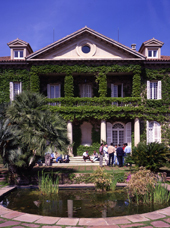
Founded in 1958, IESE’s Barcelona campus offers a full-time MBA program, a Global Executive MBA program, a Ph.D. in Management and a large range of Executive Education Programs.
Executive MBA programs are at a crossroads. Introduced nearly 70 years ago, they have become the most lucrative academic degree programs in graduate management education. The executive MBA has always been positioned differently than the traditional MBA. Because they are aimed at full-time working managers, executive MBA programs are formatted to accommodate people with very busy lives and feature amenities that go well beyond those of traditional full-time or part-time MBA programs. In addition to being organized to enable students to complete their degrees in shorter periods, these programs typically provide meals, overnight accommodations and opportunities for exposure to international research and travel.
The first executive MBA program was introduced by the University of Chicago in 1943. By the 1960s, the idea of executive education for corporate managers was firmly established. Large employers saw it as a way to develop the skills of managers while maintaining their involvement in the organization. Since then, the number of executive MBA programs has exploded both within the United States and internationally, with many programs offering joint degree programs and partnerships with business schools in Europe and Asia.
Executive MBA programs historically were designed for managers and professionals who were fully sponsored by their employers. In fact, company sponsorship was a requirement for admission, and it enabled institutions to have a premium tuition pricing strategy. But times have changed, forcing business schools to adapt to new market conditions and to develop new strategies going forward. Executive programs will need to recognize several trends.
Dwindling Tuition Reimbursement According to the 2010 Executive MBA Council Program Survey, just 30% of students enrolled in executive MBA programs received full tuition reimbursement from their employers, down from 35% in 2006 and 44% in 2001. Students increasingly pay for themselves. In 2010, 35% of the students paid for themselves, compared with 9% in 2001. Surprisingly, the shift has not had a major impact on overall enrollment, as the industry has experienced enrollment growth on the international level.
Comments (4)
Rajah Kumar
Sudhakar Sen
o.chaney
ssadrul