
Why Good Leaders Don’t Need Charisma
Think top executives have to have charisma? Think again.
Topics
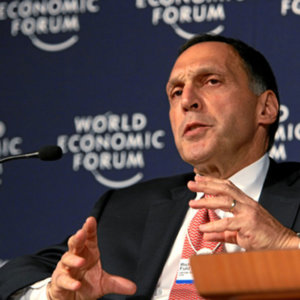
Richard Fuld was the chairman and CEO of Lehman Brothers until 2008, when it filed for bankruptcy.
When you read the business press, it’s easy to get the impression that all you need to do to make your company great is add a charismatic CEO. Find the next Steve Jobs, Jack Welch or Phil Knight and you’re halfway home.
And maybe you would be — if you happened to sign that one-in-a-million leader.
The problem is that, among charismatic executives, for every Steve Jobs, there is at least one Dick Fuld — maybe more. Persuasive and strong-minded, Fuld presided over the downfall of Lehman Brothers. Nor is Fuld alone: Six out of 18 of Germany’s most recent winners of the title “Manager of the Year” were responsible for dramatic missteps, including Daimler’s disastrous acquisition of Chrysler Corp. under CEO Jürgen Schrempp. That raises a question: Do charismatic business leaders typically outperform their more ordinary counterparts over the long run?
The Downside of Charisma
The simple answer is no. In a study of 100-year-old European corporations, we found that leaders of the higher-performing companies were often not charismatic — and were, in fact, less likely to be charismatic than the leaders of the lower-performing companies. The problem with charismatic leaders is that exceptional powers of persuasion make it easy for them to overcome resistance and opposition to their chosen course of action. If your company is heading in the right direction, a charismatic leader will get you there faster. Unfortunately, if you’re heading in the wrong direction, charisma will also get you there faster.
Take the case of Michael Frenzel, the CEO of TUI AG, Europe’s largest travel agency. When he came into office, the company was a conglomerate primarily focusing on commodities and steel. He was convinced that these businesses had no future, but he saw great potential in tourism. To set the radical reorientation in motion, the charismatic Frenzel acquired Hapag-Lloyd AG, a shipping and logistics company with a stake in a German travel agency. Divestments of commodities and steel in subsequent years provided sufficient cash to expand the tourism business, including the acquisition of Thomson Travel Group. While the spun-off steel business generated 270% return to its shareholders from 1997 to today, TUI shareholders saw their investment decline by almost 60% over the same 15-year span.
Comments (7)
Muftah Muftah
Rosalie Puiman
John Chiu
Robert Holland
megat
Christian Stadler
Mait Raava